

















The Story of Haridwar in Hindu Scriptures – Sacred Origins of the Gateway to the Gods
Discover how Haridwar earned its divine place in Hindu scriptures. From its mythical connection with Lord Vishnu and the descent of the Ganga to its role in ancient Vedic rituals, explore the sacred stories that make Haridwar the spiritual heart of India.


The Story of Haridwar in Hindu Scriptures
Haridwar – Where the Divine Meets the Earthly
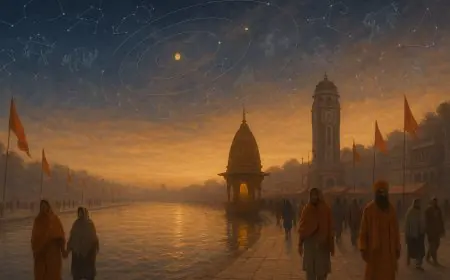
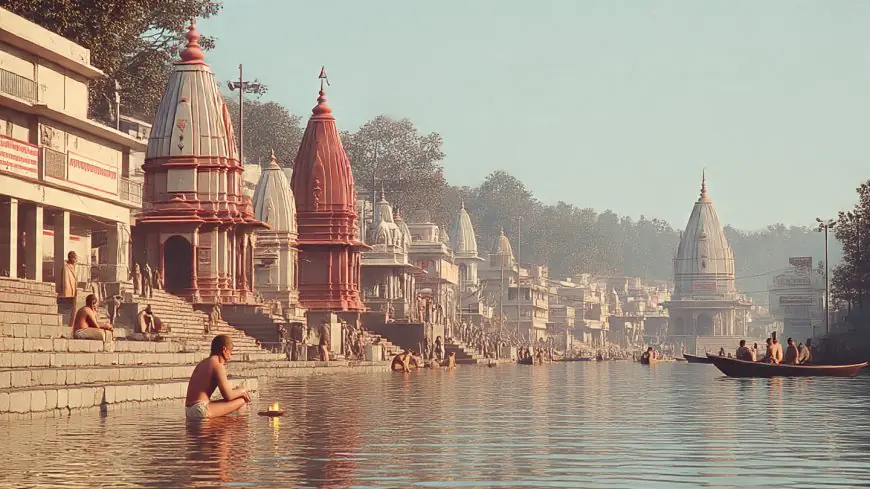
Haridwar, meaning “The Gateway to Vishnu” (Hari + Dwar), has been revered in Hindu scriptures for thousands of years. Situated along the sacred Ganga, this ancient city is not just a pilgrimage site—it is a living scripture, where mythology, faith, and cosmic energy converge. Every stone, every ghat, and every temple in Haridwar carries echoes of divine tales from the Puranas, Mahabharata, and Vedas.
In Hindu belief, the Ganga is no ordinary river; she is the celestial goddess who descended to Earth to purify humanity’s sins. Haridwar is said to be the very site where she touched the mortal world. For this reason, the city is also called Moksha Dwar—the gateway to liberation.
The Divine Descent of the Ganga
According to the Vishnu Purana and Ramayana, King Bhagiratha meditated for years to bring the river Ganga down from heaven to Earth to purify the ashes of his ancestors. When she agreed to descend, her powerful flow threatened to destroy the world. Lord Shiva contained her in his matted hair, releasing her gently at Haridwar.
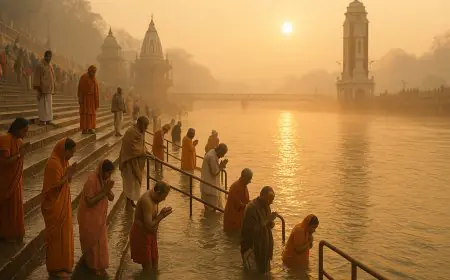
Thus, Haridwar became the first earthly touchpoint of the Ganga—a sacred moment that symbolizes divine grace reaching humanity. Even today, pilgrims bathe here seeking purification and blessings for salvation.
Trending Guides Now
Stories from the Sangam: Pilgrims’ Experiences of Faith
How Ganga Water Is Scientifically Unique – The Divine Chemistry of Ardh Kumbh 2027
Astrology of Faith: How Ardh Kumbh Mela 2027 Aligns with the Stars
The Secret Astronomical Timing Behind Ardh Kumbh Mela 2027

Ujjain Railway Station to Mahakaleshwar Temple Distance (2026 Guide)

Ujjain Simhastha 2028 Dates Announced: Full Shahi Snan & Event Timeline

Ujjain Simhastha Update: CM Mohan Yadav Reviews 2028 Works
Karkateshwar Mahadev: 22/84 Mahadev of Ujjain
Lord Vishnu’s Footprint at Har Ki Pauri
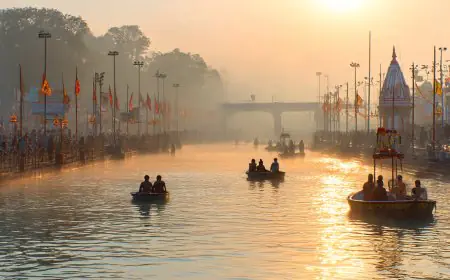
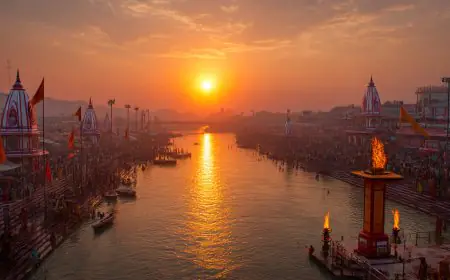
The name Har Ki Pauri translates to “The Steps of Lord Vishnu.” Scriptures recount that Lord Vishnu once visited this very spot and left his footprint embedded in the stone. Devotees believe that bathing here washes away all sins and grants moksha. The evening Ganga Aarti, performed at Har Ki Pauri, honors this divine connection—a spectacle where thousands of lamps float on the river, mirroring stars in the heavens.
The Skanda Purana describes Haridwar as one of the seven holiest cities (Sapta Puri) capable of granting liberation—alongside Ayodhya, Mathura, Kashi, Kanchi, Ujjain, and Dwarka.
The Legend of Sati and Daksha Mahadev
The Shiva Purana ties Haridwar deeply with the tragic tale of Goddess Sati and her father, Daksha Prajapati. The Daksha Mahadev Temple in Kankhal marks the spot where Daksha organized a grand yagna but deliberately excluded his son-in-law, Lord Shiva. Insulted by this act, Sati immolated herself in protest. Enraged, Shiva performed the Tandava, his cosmic dance of destruction, carrying her burnt body.
It is believed that her heart fell in Haridwar, making it one of the Shakti Peethas—sacred sites associated with the goddess’s divine power.
Maya Devi – The Presiding Goddess of Haridwar
Long before temples rose across the ghats, Maya Devi Temple stood as the spiritual core of Haridwar. Mentioned in the Devi Bhagavata Purana, Maya Devi is worshipped as the protector of the city. Together with Chandi Devi and Mansa Devi, she completes the Trikona Parikrama—a sacred triangle of feminine energy. Pilgrims visiting Haridwar consider this circuit essential for receiving divine blessings.
Mentions in Ancient Texts
Haridwar appears throughout Hindu scriptures under names like Gangadwara and Mayapuri. The Mahabharata describes the Pandavas visiting the Ganga here before ascending to heaven. The Vayu Purana and Padma Purana refer to it as the Tapo Bhumi—the land of penance—where sages like Kapila and Bhagiratha performed austerities.

The Rigveda praises the Ganga’s sacred flow through this region, calling it a channel of divine truth and purity. The Vedas also identify Haridwar as a meeting point of three worlds—the heavens, the Earth, and the netherworld—symbolizing spiritual unity.
The Kumbh Connection
Haridwar is one of the four sites where drops of amrita (nectar of immortality) fell during the cosmic battle between gods and demons, as described in the Bhagavata Purana. The Kumbh Mela celebrates this celestial event every 12 years, drawing millions who come to cleanse themselves in the sacred Ganga.
The Ardh Kumbh (half Kumbh), held every six years, continues this tradition, reaffirming Haridwar’s role as a cosmic gathering place where dharma, devotion, and destiny align.
Spiritual Significance of the Ganga at Haridwar
The Ganga in Haridwar is considered alive with spiritual consciousness. Saints and yogis describe her flow as the embodiment of divine compassion. The sound of the river is said to resonate with the vibration of Om—the universal sound of creation.
The Brahmanda Purana and Padma Purana state that even a single drop of Ganga water taken at Haridwar can erase the karmic burden of lifetimes. Hence, every pilgrim, regardless of background, is drawn to her sacred banks with faith and humility.
A Living Scripture
Haridwar is not merely a geographical location; it is a scripture in motion—a confluence of myth and reality. Each ghat is a chapter, every temple a verse, and every devotee a word in the ongoing story of faith.
From the legends of Lord Vishnu to the compassion of the Goddess Ganga, Haridwar continues to embody the eternal dialogue between divinity and humanity. As the city prepares for Ardh Kumbh 2027, it stands as a reminder that the stories written in the Puranas still breathe through its sacred air and flowing waters.
Frequently Asked Questions