



















Start Your Meditation Journey: The Ultimate Beginner’s Guide
Discover the ultimate beginner’s guide to meditation, with simple techniques, step-by-step methods, benefits, tips, and spiritual insights to help you start your peaceful journey today.
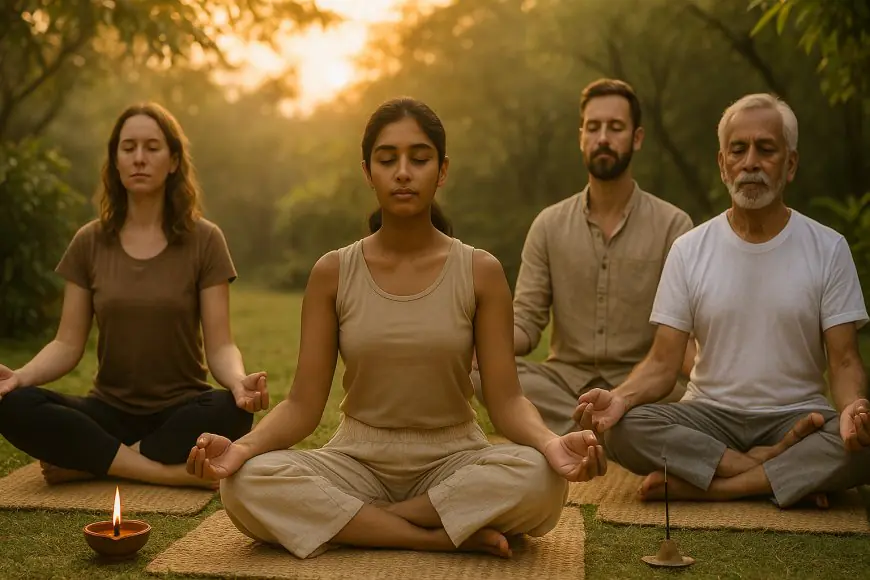


Start Your Meditation Journey: The Ultimate Beginner’s Guide
Meditation is one of humanity’s oldest practices — a gentle bridge between the mind, the breath, and the deeper spirit within. Today, as life becomes faster, noisier, and more demanding, meditation has become more than a spiritual ritual; it is a lifeline. Whether you’re a student searching for focus, a working professional trying to reduce stress, or someone seeking inner peace, meditation offers a path that anyone can walk.
This ultimate beginner’s guide helps you understand meditation in the simplest, clearest way. You’ll explore how it works, why it matters, and how to begin your journey in a way that feels natural, peaceful, and sustainable.
Why Meditation Matters Today
Modern life constantly pulls your mind in many directions — notifications, responsibilities, deadlines, emotions. Meditation helps you return to yourself. When you meditate, you train your mind to become calm, centered, and resilient. Just 10 minutes a day can transform how you think, feel, and respond to the world.
Science now supports what ancient yogis knew for centuries: meditation enhances focus, reduces anxiety, improves sleep, strengthens emotional balance, and even boosts creativity. For beginners, the most beautiful truth is this — you don’t need experience, a special place, or spiritual mastery. You only need your breath.
Trending Guides Now

Ujjain Railway Station to Mahakaleshwar Temple Distance (2026 Guide)

Ujjain Simhastha 2028 Dates Announced: Full Shahi Snan & Event Timeline

Ujjain Simhastha Update: CM Mohan Yadav Reviews 2028 Works

Karkateshwar Mahadev: 22/84 Mahadev of Ujjain
Mahakaleshwar Temple Entry Rules 2026: Dress Code, Mobile & Bag Policy

Bhasma Aarti at Mahakaleshwar Temple – Complete Pilgrim Guide

Why Ujjain Is One of the Four Kumbh Cities in India

Best Time to Visit Mahakaleshwar Temple Crowd And Weather Guide
Understanding Meditation: The Beginner-Friendly Definition
Meditation is the practice of gently training your mind to stay present. It is not about forcing thoughts away; it is about learning to observe them without getting pulled inside their storm.
At its core, meditation teaches you three things:
-
Awareness — noticing thoughts, breath, sensations
-
Presence — staying in the moment instead of drifting to the past or future
-
Calmness — a peaceful inner space you can always return to
With consistent practice, your mind becomes stronger, clearer, and more aligned with your true self.

How Meditation Works: The Simple Science
When you meditate:
-
Your breathing slows
-
Your nervous system relaxes
-
Stress hormones like cortisol drop
-
Your brain’s prefrontal cortex (focus area) strengthens
-
Emotional balance improves
-
Sleep cycles regulate
Meditation literally rewires your brain — a process called neuroplasticity — making you calmer and more resilient in everyday life.
Choosing the Right Meditation Style as a Beginner
You don’t need to try everything at once. Start simple.
1. Breath Awareness Meditation
Perfect for beginners. Focus on natural inhales and exhales.
2. Mindfulness Meditation
Notice thoughts, sounds, or sensations without reacting.
3. Guided Meditation
A teacher or audio guide leads your practice.
4. Mantra Meditation
Repeat a calming phrase like “Om Shanti,” “So Hum,” or “Peace.”
5. Body Scan Meditation
Move awareness slowly through the body to relax tension.
Choose whichever feels comfortable — meditation is personal, not rigid.
How to Start Meditating (Step-by-Step)
Step 1: Choose a Quiet Place
Sit anywhere peaceful — your bedroom, balcony, garden, or a corner of your home.
Step 2: Sit Comfortably
On a chair, cushion, or mat. Keep your spine relaxed but upright.
Step 3: Close Your Eyes Gently
Relax your shoulders and keep your hands on your lap or knees.
Step 4: Take a Deep Breath
Inhale slowly… hold… exhale gently. Repeat three times.
Step 5: Begin Observing Your Breath
Just watch it. Don’t control it. Let it flow naturally.
Step 6: When the Mind Wanders — Return
Gently bring your attention back to the breath. No judgment.
Step 7: End with Gratitude
Slowly open your eyes. Sit quietly for a moment.
Start with 5 minutes a day. Slowly increase to 10–15 minutes.
Common Challenges Beginners Face (And How to Overcome Them)
“My mind won’t stop thinking!”
This is normal. Thinking is natural. Meditation is the art of returning.
“I get bored or restless.”
Stay patient. Your mind is learning a new skill.
“I don’t know if I’m doing it right.”
If you're sitting, breathing, and becoming aware — you’re doing it right.
“I don’t have time.”
Even 3 minutes daily creates benefits. Meditation is flexible.
The Best Time to Meditate
The ideal times are:
-
Early morning (Brahma Muhurta) — highest mental clarity
-
Evening sunset time — naturally calming
-
Before bedtime — helps improve sleep
But the truth is: any time you practice consistently becomes the perfect time.
Creating Your Own Meditation Space
You can enhance your practice by creating a small sacred zone.
Add:
-
A meditation mat or cushion
-
A diya or candle
-
Incense or essential oils
-
A spiritual symbol or photo
-
Plants, natural light, or crystals
This signals your mind that it's time to enter calmness.
Benefits You Will Start Feeling as a Beginner
Within the first week:
-
Better focus
-
Relaxed breathing
-
Reduced stress
-
More patience and clarity
Within 1–2 months:
-
Emotional stability
-
Improved sleep quality
-
Higher self-awareness
-
More energy and confidence
-
A calm, steady mind
Meditation becomes a lifestyle, not a task.
10 Simple Meditation Techniques You Can Try Today
-
1-Minute Deep Breathing
-
Box Breathing (4x4x4x4)
-
Counting Your Breaths
-
Chanting “Om”
-
Mindful Tea Meditation
-
Walking Meditation
-
Hand Mudra Meditation
-
Candle Flame Gazing (Trataka)
-
Loving-Kindness (Metta) Meditation
-
Silent Sitting Meditation
Try one each day and discover which resonates most with you.
Meditation and Spiritual Growth
Meditation is not only mental relaxation — it has a spiritual dimension:
-
It opens the heart
-
It awakens inner wisdom
-
It deepens intuition
-
It connects you with your true Self
-
It reduces ego-driven reactions
Many beginners feel a warmth, expansion, or stillness within — signs that meditation is working.
How to Make Meditation a Daily Habit
-
Start small
-
Meditate at the same time daily
-
Use a meditation app or timer
-
Sit with a peaceful intention
-
Join a meditation group
-
Reward yourself after practice
-
Keep a meditation journal
Consistency matters more than duration.
Frequently Asked Questions